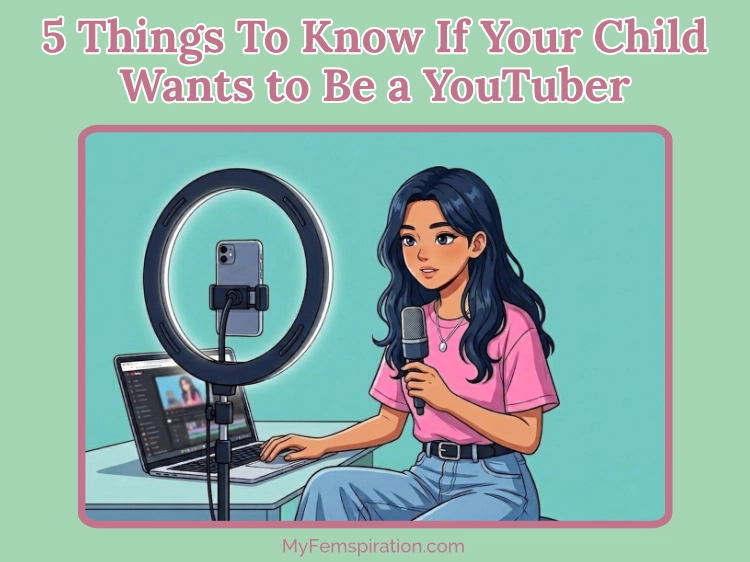
“Should I Let My Kid Have a YouTube Channel?” YES! Here’s Why
In the modern day, most children have swapped their dreams of being an astronaut or a rock star for being a YouTuber.
This shift stumps most adults and makes us wonder: Why does every kid want to be a YouTuber?
Honestly… it’s no surprise.
YouTube is currently the most dominant social media platform for kids and teens.
With nearly 90% of young people consuming Shorts or long-form videos starring creators who are entertaining, famous, and rich with dream opportunities… it is only natural that they eventually want to move from being a viewer to stepping into the spotlight as a content creator.
But for most parents… when your child asks to start their own channel… it triggers a flood of anxiety.
We worry about digital privacy, online safety, and whether content creation is just a massive waste of time that distracts from school.
I remember when my son came home from school, super excited because his classmates all had YouTube channels… and he wanted one too.
While I was concerned about his digital footprint… I also saw an opportunity for a creative hobby that could teach him real-world skills and maybe even serve as his first “job.”
If you are currently on the fence and asking, “Should I let my child have a YouTube channel?”… here are 5 things I’ve learned so far as a parent of a blooming kid YouTuber.
5 Things To Know If Your Child Wants to Be a YouTuber
1. Creators Can Develop Valuable Skills
When my son tells people about his channel, many adults brush him off.
They see it as a silly hobby and suggest he focus on “bigger things” like school or a “real job” where he can actually learn something.
That’s a common fear for parents… we don’t want our kids wasting time on “worthless” screen time.
But I’ve seen firsthand that building a successful channel is far from worthless.
To make it work, a kid has to learn the basics of video production, digital editing, script writing, and graphic design.
They also have to understand target audiences and brand consistency.
These are high-value technology and marketing skills that schools rarely teach… but the modern job market craves.
Most importantly, it builds confidence.
Putting your ideas and creativity out there for the world to see takes guts.
It teaches kids to chase their dreams and normalize the “cringe” of being seen trying.
Learning to hit record despite the fear of being judged is a life lesson that goes far beyond a YouTube view count.
2. Protect Your Child’s Safety on YouTube
Next, you may wonder: “Is my child too young for a YouTube channel?” and is it even safe for kids to post on the platform?
If you’re considering letting them start, it’s super important to have a talk with your child about internet safety before that first video is ever uploaded.
This means teaching them to keep real names, school locations, and home addresses completely off-camera and out of the comments.
When it comes to age, a child typically needs to be 13 to manage their own account.
Anyone under 13 must have their account set up and supervised by a parent.
But as a parent of a content creator, playing an active role is non-negotiable, no matter their age.
I’ve checked out other channels in my son’s YouTube community… and it’s alarming to see what some kids are recording or the personal info they’re leaving in the comments, seemingly with their parents having no idea.
Because of that, I’ve stepped in as my son’s business manager.
I help set up the accounts, supervise the content, and… most importantly… monitor the comments.
The internet can be brutal, and some people love crushing a child’s confidence from behind a keyboard.
I vet every comment before he sees it to filter out the toxic trolls.
If something mean does slip through… we use it as a teachable moment about how to handle negativity and the psychology of people who hide behind a screen.
I also handle all requests for brand deals and collabs to ensure he doesn’t fall for online scams.
3. Help Manage Their Viral Expectations
Most kids see their favorite influencers hitting millions of views and expect instant fame.
I remember my son wanting to include a “Leave me 10k likes for the next upload” call-to-action in his very first video because he saw a pro do it.
When that video capped at 30 views… the disappointment was real.
It’s easy for kids to want to give up if they don’t immediately explode.
It’s important to teach our kids that YouTube growth takes time and consistency.
It’s OK to start small and have some flops or fails.
The goal should be creative expression, continued improvement, and tenacity… not just “going viral.”
4. Set a Production Schedule
Another thing us parents tend to worry about with children who want to be content creators is productivity.
For most people, it’s easy for a fun new hobby to become an obsession that makes us neglect the “boring” things.
Children are no different.
To prevent them from neglecting schooling, chores, or family time to fit in more YouTube… parents have to set firm boundaries from the start.
Kid YouTubers should have specific times for filming and a set upload schedule that doesn’t interfere with their real-world responsibilities.
In my home, we treat it like a professional “office window.”
He has school work, YouTube time, and a window for free time so his schedule stays on track.
5. You Don’t Need a “Studio” to Start
One of the biggest myths is that you need expensive equipment and professional lighting to be a “real” YouTuber… and your kid will definitely ask for it.
So, if you’re wondering, “What equipment does my child need to start on YouTube?”… the reality is… you can get started with the tech you already have.
- The Camera: A modern smartphone is more than enough to record high-quality 4K video.
- The Audio: Standard earbud mics or a basic headset work perfectly for a beginner.
- The Lighting: You don’t need fancy ring lights. Using natural daylight from a window is often better than cheap artificial lights.
- The Editing: Professional-looking edits can be done with free programs like CapCut or Microsoft Clipchamp.
The only small investment I recommend is a simple tripod to keep the shots steady.
Otherwise… focus on the content… not the gear.
In Closing
If you are still wondering, “Should I let my child become a YouTuber?”, I say go for it.
By leaning into their interests instead of shutting them down, we turn a screen-time obsession into a real-world learning experience.
The true value of letting your child become a creator isn’t the “fame.”
It is the technical skills, the creative grit, and the digital literacy they build along the way.
Whether they end up with 30 views or 30,000, they are learning to be producers instead of just consumers… and that is a win in any career path they choose.
Want More Like This?
Join my email list to have deep, honest, and sometimes messy conversations about life and womanhood… delivered straight to your inbox.
💕If this blog has ever helped you feel seen or supported, you can also leave a tip below. Every dollar helps keep MyFemspiration alive and growing.